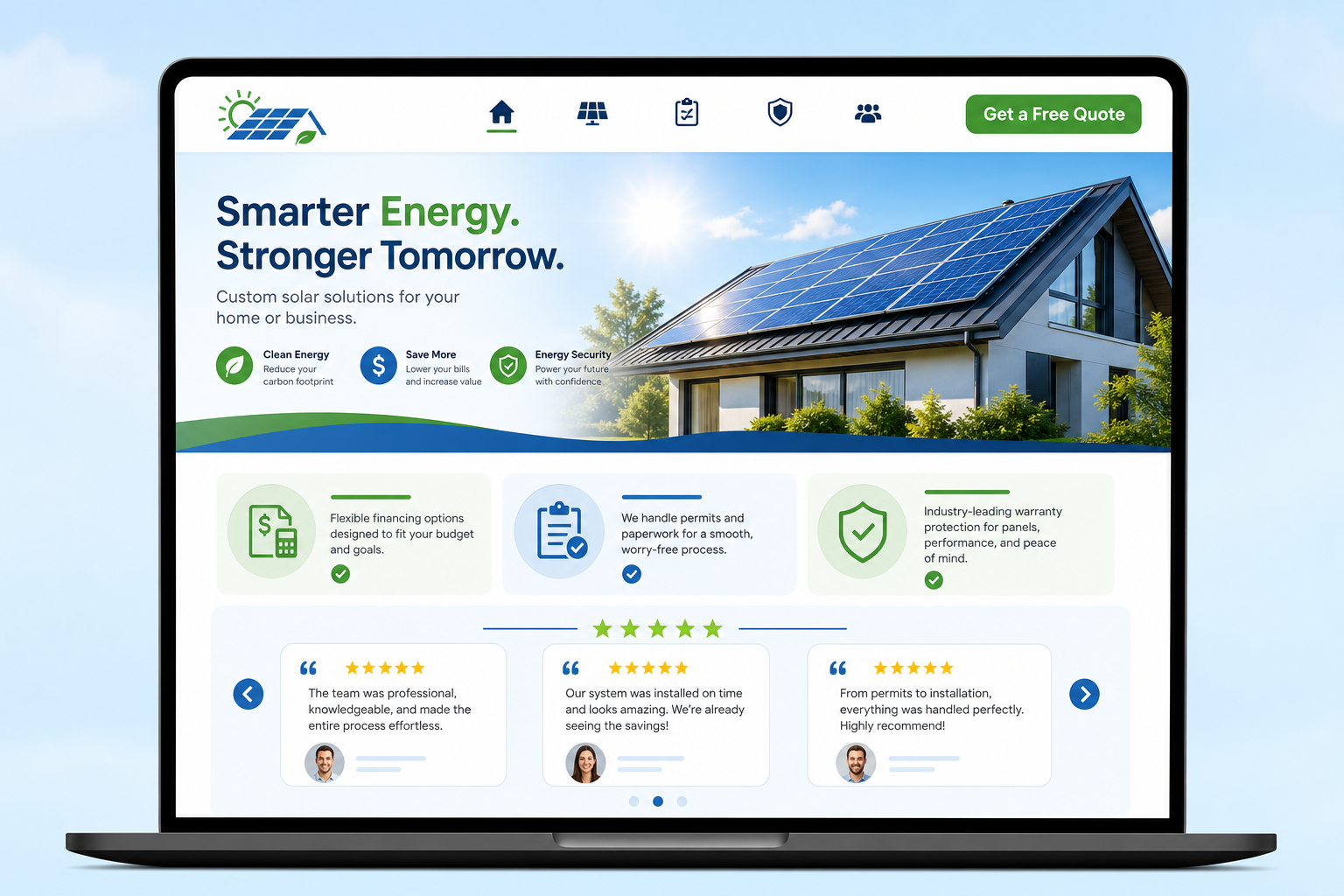
Most home builder websites look professional and convert almost nothing. The photography is strong, the branding is clean, and the contact form is buried on a page no serious buyer ever finds. Builders invest in the visual layer and skip the structural one, and the result is a site that impresses visitors without moving them. A home builder website checklist is not about having the right aesthetic. It is about having the right pages, each doing a specific job in the buyer's decision process.
The custom home buyer is not making a fast decision. They are comparing builders over months, looking for signals that one team understands the process, communicates well, and delivers on what they promise. Every page on your site is either building that case or failing to. A missing process page, a thin FAQ, or a contact form that asks for nothing useful is not a neutral absence. It is a gap the buyer fills with doubt.
This post covers the ten pages every custom home builder website needs, what each one should accomplish, and the specific mistakes that turn a functional page into a missed opportunity.
Why Page Structure Determines Lead Quality
A website that ranks well and converts poorly is a traffic problem disguised as a marketing win. Builders often focus on getting more visitors when the real problem is that the visitors they have are leaving without enough information to act. The structure of a website determines what a buyer can learn, how quickly they can learn it, and whether the next logical step is clear. When pages are missing or underdeveloped, the buyer who was close to reaching out decides they need more information and goes looking for it somewhere else.
Page structure also affects search performance directly. A site with a strong process page, a location page, a portfolio, and a blog gives Google multiple entry points and signals comprehensive coverage of the builder's subject matter. A site with a homepage, a gallery, and a contact form gives Google very little to work with. The pages below are not optional extras. They are the foundation of a site that earns traffic and converts it. For a deeper look at how website structure connects to the full marketing system, see our guide on turning your custom home builder website into a sales system.
The 10 Pages Every Home Builder Website Needs
1. Homepage
The homepage has one job: answer the buyer's first three questions in the first ten seconds. What do you build? Where do you build? Why should I trust you? Most builder homepages answer the first question with photos and skip the other two entirely. A buyer who cannot immediately tell whether you build in their area, at their scale, at their price point, will leave before they ever engage with your work.
A strong homepage leads with a clear headline that names the type of builder you are and the market you serve. It directs buyers to the pages that matter most, surfaces your strongest social proof, and ends with a single, obvious next step. Every element should be in service of moving the right buyer forward, not showcasing the brand.
2. About Page
A custom home buyer is not choosing a contractor. They are choosing a partner for one of the most significant decisions of their life, and they will read your about page trying to decide whether they trust you enough to start that conversation. Generic about pages that describe values without showing the people behind them lose this moment. The buyer wants to know who runs this company, how long they have been doing this, and what kind of experience past clients have had.
An about page that introduces the principals by name, tells a real story about how the company was built, and connects that history to what it means for the client today does the trust-building work that no amount of portfolio photography can replicate.
3. Custom Homes or Services Page
Buyers arrive at your services page already interested. The question they are trying to answer is whether you are the right fit for their specific project. A services page that describes your work in vague terms, "we build beautiful custom homes," does not help them answer that question. A services page that names your minimum project size, your build geography, your specializations, and the type of client who gets the most from working with you does the qualification work before anyone picks up the phone.
This page should also be where you distinguish between fully custom and semi-custom builds, design-build versus bid-build, and any specialty areas like coastal construction, rural builds, or land-home packages. Specificity here attracts better-fit buyers and filters out the ones who were never going to convert.
4. Communities or Locations Page
A significant portion of custom home searches include a geographic modifier. Buyers search for builders in specific counties, cities, or communities before they search by builder name. A locations page that names the markets you serve, with enough detail about each to signal local knowledge, captures that search intent and routes buyers to the right conversation faster.
For builders serving multiple markets, individual location pages with market-specific content perform far better than a single page that lists service areas. Each one becomes an entry point for buyers in that market and a signal to Google that you have genuine presence there, not just a service-area checkbox.
5. Portfolio or Gallery
The portfolio is where buyers confirm that your work matches what they are imagining. Strong photography is the baseline. What separates a portfolio that converts from one that does not is the context around the images. A photo of a finished home tells a buyer what it looks like. A short project description that names the location, the size, the design priorities, and the challenges solved tells the buyer that you understood what the client wanted and delivered it. That context is what moves the portfolio from a gallery into a trust-building sales asset.
Organize projects in a way that mirrors how your best buyers think. A builder who works across multiple price points or styles should make it easy for a buyer to find the work most relevant to their project, rather than presenting everything in a single undifferentiated feed.
6. Process Page
The process page is the page most buyers spend the longest time on and the one most builders invest the least in. Buyers fear the unknown more than they fear cost. A process page that walks through every phase of the build from first conversation to move-in, explains what the builder handles, and describes what decisions the client will make removes the single largest source of hesitation a prospect carries into the decision. For a detailed breakdown of what this page should include, see our guide on what to put on your custom home builder process page.
Working with a specialist
Knowing what pages you need and building them to convert are two different things.
Most builder websites have the right pages. They just don't have the right copy, structure, or calls to action to turn visitors into serious buyers. If you'd rather have a team that already knows how custom home buyers make decisions build this for you, see how we work with custom home builders.
How The Diamond Group works with custom home builders →7. Testimonials and Reviews Page
Social proof on a custom home builder site does different work than on most service businesses. A buyer committing to an 18-month relationship and a contract worth hundreds of thousands of dollars is not reassured by a five-star average. They want to read what the experience of working with you actually felt like. A testimonials page that surfaces detailed, story-driven reviews covering communication, timeline management, budget handling, and how problems were resolved gives serious buyers the specific evidence they need to cross the threshold from interested to committed.
Reviews that reference the process, not just the outcome, do the most work. "They delivered a beautiful home" is a data point. "They called every Friday with an update and flagged a framing issue before it became a real problem" is a trust signal. Your testimonial page should actively collect and display the second type. For more on building the review volume and quality that does this work, see our guide on how to get more Google reviews as a custom home builder.
8. Blog
A blog earns its place on a builder website when it answers the questions buyers are actively searching during the 12 to 24 months before they are ready to break ground. Content that covers how the build process works, what drives cost, how construction financing differs from a standard mortgage, and how to evaluate and choose a builder captures early-stage buyers and builds trust long before the first inquiry. National Association of Realtors research consistently shows that buyers use the internet as their primary research tool, and the builder whose content answers their questions during that window earns an advantage no competitor can easily overcome.
A blog that publishes consistently also compounds over time. Each post adds a new entry point for search traffic, supports the internal linking structure that distributes authority across the site, and gives buyers more reasons to stay engaged during a long decision process. For a full breakdown of the content that does the most work during the buyer research phase, see our overview of the buyer-education content every custom home builder should publish.
9. Contact Page
A contact page that collects only a name, email, and message field is not a qualification system. It is an inbox. The builder who redesigns their contact page to ask four specific questions, lot ownership status, financing status, timeline, and approximate budget, separates buyers who are ready to have a real conversation from those who are still in early research before anyone on the team spends a minute on the phone. That filter alone reduces wasted estimates and improves the quality of every consultation.
The contact page should also set clear expectations for what happens next. A buyer who submits a form and hears nothing for 48 hours has already begun to doubt whether this builder is as organized as their website implies. A confirmation that explains the next step and the expected response time removes that doubt and reinforces the professionalism the rest of the site has been building.
For the full system that runs after a form is submitted, including the HubSpot sequences and pipeline setup that turn inquiries into booked consultations, see our guide to custom home builder website lead conversion.
10. FAQ Page
An FAQ page is one of the highest-leverage pages a builder can publish because it intercepts buyers at the exact moment their hesitation is highest. A buyer trying to decide whether to reach out is running through a mental checklist of concerns: Do they build in my area? Can I afford this? How long does it take? What happens first? A FAQ page that answers those questions plainly and specifically removes the friction between interest and action.
It also performs well in search and in AI-generated answer results. The Census Bureau's Survey of Construction provides the kind of authoritative data on build timelines and construction characteristics that a well-sourced FAQ can reference, building credibility with both buyers and search engines simultaneously. Questions about timelines, budgets, lot requirements, financing, and what the first consultation looks like are already coming up on every sales call. The FAQ page answers them once, for every future buyer, around the clock.
The Page That Ties Everything Together
A strong set of individual pages is the foundation. What converts them into a system is the connective tissue between them: internal links that route buyers naturally from one page to the next, calls to action that appear at the right moment on each page, and a contact form that collects the information needed to start the right conversation. A buyer who lands on your blog, reads your process page, checks your portfolio, and submits a detailed intake form has been qualified by your website before anyone on your team is involved. That is what a sales-ready site looks like, and building it is exactly where a specialist makes the difference.
Ready to build it properly?
The right pages are just the start. The Diamond Group builds the whole system.
We design and build websites for custom home builders structured to attract serious buyers, answer the right questions, and make your firm the obvious next call. If your website is not doing that yet, let's change it.
See how we work with custom home buildersAbout The Diamond Group
The Diamond Group is a Wilmington, NC based digital marketing and web design agency committed to helping today's small businesses grow and prosper. With a 30-year track record of success, their proprietary in-house system and concierge-level multi-disciplinary team approach to marketing guarantees double-digital growth and optimizes marketing ROI.
Related Posts
How to Add FAQs to Your Website (Best Practices Guide)