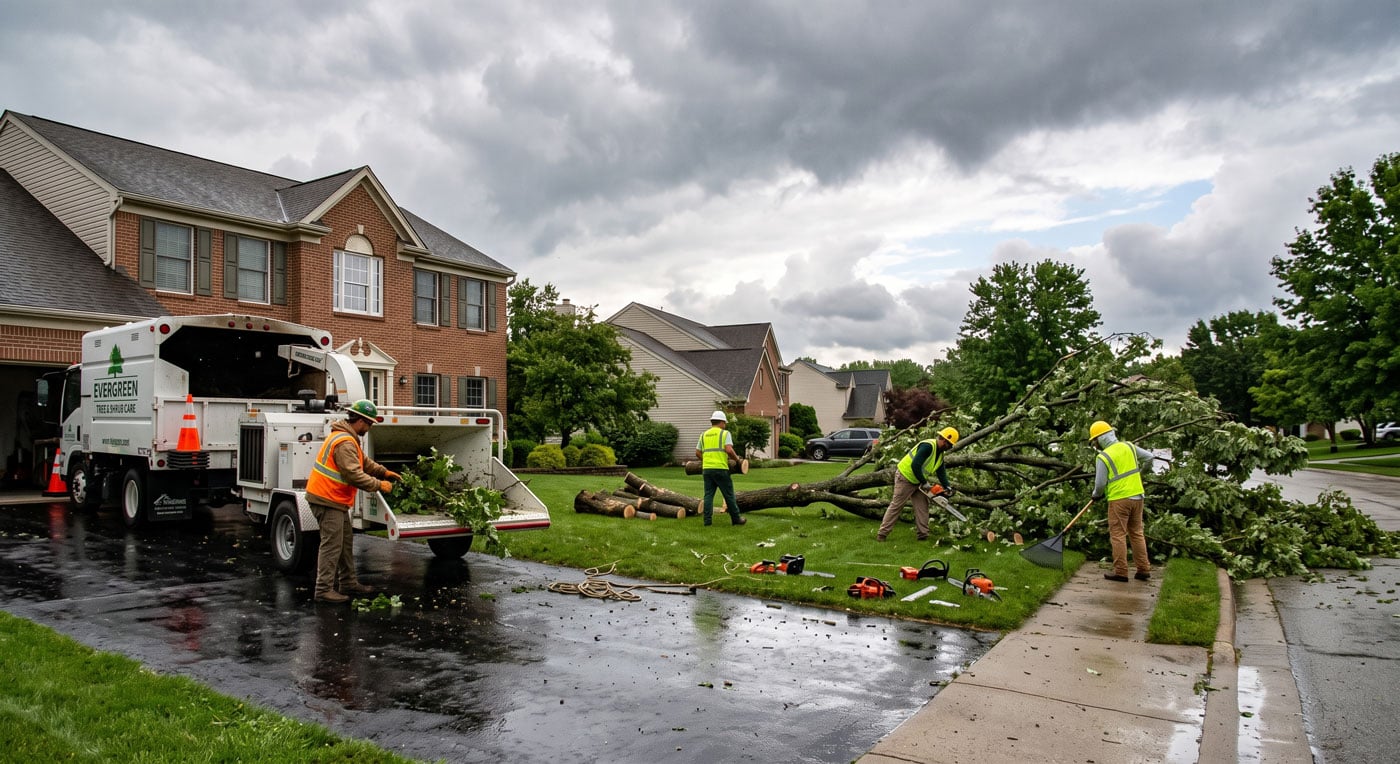
A homeowner searches "tree removal near me" after a storm knocks a branch onto their fence. At the top of the results page - above every website, above every regular Google Ad, above the map pack - is a row of green "Google Guaranteed" badges with phone numbers and star ratings. Those are Google Local Services Ads. The homeowner calls one of those numbers. They do not scroll down to find a website.
For tree service companies, Google Local Services Ads are the highest-ROI paid channel available. The model is pay-per-verified-lead: you only pay when a homeowner actually calls or messages you through the ad, not for every click that may or may not convert. The Google Guaranteed badge - earned by clearing Google's verification process - signals to homeowners that your business has been screened, insured, and approved. That trust signal converts at a higher rate than any standard paid ad.
This guide covers how Google Local Services Ads work for tree service companies, how to get set up and verified, what the costs look like, and how to build an LSA presence that consistently produces booked jobs.
How Google Local Services Ads Work for Tree Service Companies
LSAs are structurally different from standard Google Search Ads in three important ways. First, placement: LSAs appear at the very top of search results, above traditional paid ads and above the map pack. When someone searches "tree service [city]" or "emergency tree removal near me," the first thing they see is the LSA row. Think With Google research consistently shows that local search drives high-intent action - people searching for tree service are not browsing, they have a job that needs doing.
Second, pricing: LSAs operate on a pay-per-lead model rather than pay-per-click. You are charged when a homeowner contacts you through the ad - a call or a message - not for every person who sees it. Leads that are clearly outside your service area or for services you do not offer can be disputed and refunded. This makes LSA budget much more predictable than standard PPC, where impressions and clicks may not translate to actual inquiries.
Third, the Google Guaranteed badge: businesses that complete Google's verification process earn a green badge that appears on their LSA listing. That badge signals to homeowners that Google has verified the business's licensing, insurance, and background checks. For a high-trust purchase like tree removal - where a crew with heavy equipment is working near the house - that verified credential matters to the homeowner's decision.
For a complete guide to structuring campaigns by intent, match type, and landing page, see our Google Ads campaign guide for tree service companies.
Getting Verified: The Google Guaranteed Process
The verification process is the barrier that makes LSAs valuable. Most uninsured operators and marginal competitors will not clear it, which means your listing is competing against a smaller, more credible pool. The process involves four main steps.
Business verification
Google verifies basic business information: business name, address, phone number, service areas, and categories. For tree service companies, the primary category is "Tree Service" with relevant subcategories like "Tree Trimming," "Stump Removal," and "Emergency Tree Service." Accurate service area setup is critical - Google uses this to determine which searches trigger your ad, so setting it too broadly wastes budget on searches outside your working radius.
License verification
Google requires proof of relevant licensing for the state and locality where you operate. Requirements vary by state - some require a licensed arborist on staff, others require a contractor license, some have no specific tree service licensing requirement. Google's verification team will specify what documentation is needed for your market. Having this documentation ready before starting the process speeds up approval significantly.
Insurance verification
General liability insurance and workers' compensation coverage are required. Google verifies directly with the insurance provider. Coverage minimums vary by category and state. Most established tree service companies already carry coverage that meets or exceeds these requirements - the verification step just confirms it on file with Google. See Google's Local Services Ads overview for the current documentation checklist and eligibility requirements by category.
Background check
Owners and operators go through a background check administered through a third-party provider. This is the step most operators skip when trying to avoid the process - and the step that most directly signals trustworthiness to homeowners. Completing it is not just a compliance checkbox. It is a differentiator.
Working with a specialist
LSA setup is simple. Getting it to produce booked jobs consistently is the work.
If you would rather have a team that already knows how to set up, verify, and optimize LSAs for tree service companies handle this for you, see how The Diamond Group works with tree service companies.
How The Diamond Group works with tree service companies →What Tree Service LSAs Cost and How Budgeting Works
LSA pricing is set by Google based on lead type, market competition, and service category. Tree service lead costs vary significantly by market - a high-competition metro like Raleigh or Charlotte will have higher lead costs than a smaller market with fewer competitors. The range for tree service leads typically falls between $20 and $80 per verified lead, depending on market and service type.
Emergency tree service leads - storm damage, hazard removal, after-hours calls - tend to command higher costs because the intent is highest and the competition to appear for those searches is most intense.
Budget is set as a weekly amount that Google distributes across the week to maximize leads. Google will occasionally spend slightly above the weekly budget if lead opportunities are strong, but will balance this out in subsequent weeks. The practical implication: set a budget based on how many leads per week your team can realistically handle and follow up on. An LSA campaign that generates more leads than the team can contact within the hour is wasting money - response time is one of the key factors Google uses to rank LSA listings.
How Google Ranks LSA Listings
Not all verified businesses appear in the same position in the LSA row. Google uses several signals to determine ranking, and understanding them changes how you manage the account.
Review score and volume are the most visible signals. A tree service company with 80 reviews averaging 4.9 will consistently outrank one with 20 reviews averaging 4.5, all else equal. This is the direct connection between the review generation system and LSA performance - strong reviews do not just win the comparison after the click, they determine whether you appear at the top of the click. For a detailed guide to building the review foundation that supports LSA rankings, see our post on Google reviews for tree service companies.
Response time is the second major signal. Google measures how quickly verified businesses respond to leads and rewards fast responders with better placement. A tree service company that responds to LSA leads within minutes will outrank one that responds within hours, even if the slower responder has more reviews. This is the operational reality of running LSAs well: the ad works when the phone gets answered.
Proximity and service area match round out the primary signals. Google favors businesses that are geographically relevant to the searcher and whose stated service areas match the search location. A tree company that has set up service areas accurately and completely will appear more consistently than one with a vague or overly broad geographic footprint.
How LSAs Fit Into the Full Tree Service Marketing System
LSAs produce the best results when they are running on top of a strong organic foundation rather than as a standalone channel. A tree service company with an optimized Google Business Profile, strong local rankings, and a consistent review velocity will see lower lead costs from LSAs and higher conversion rates - because homeowners who see the LSA listing and then check reviews find a profile that reinforces the decision to call.
The A+ Tree and Crane rebuild illustrates this directly. When The Diamond Group restructured their paid channels, LSA optimization was part of the same system rebuild that included Google Ads restructuring, a new website, and a full local SEO foundation. The cost per lead dropped from $292 to $15.83 - not because of any single channel, but because every channel was pulling in the same direction. See the full account of how that system came together in the A+ Tree and Crane case study.
For tree service companies starting from zero on local search, the right sequence is: build the Google Business Profile and review foundation first, then add LSAs, then layer in Google Search Ads for services or markets where LSA coverage is thin. Running LSAs before the organic foundation is in place is not wrong - it produces leads from day one - but it costs more per lead and converts at a lower rate than the same campaign running on top of a well-built local presence. The full channel sequence is covered in our tree service marketing guide and in the broader LSA guide for home service contractors.
The home services marketing system that connects LSAs, local SEO, reviews, and a converting website is the same system The Diamond Group builds for tree service companies, HVAC contractors, roofers, and other residential trades. The channels are the same. The configuration is specific to how homeowners find and choose tree service companies - and that specificity is what makes the difference between a campaign that produces calls and one that produces reports.
Built for tree service companies
Pay per lead. Not per click.
The Diamond Group sets up and manages Google Local Services Ads for tree service companies as part of a complete marketing system - verification, profile optimization, review generation, and budget management all connected to booked jobs and real revenue.
See how we work with tree service companiesAbout The Diamond Group
The Diamond Group is a Wilmington, NC based digital marketing and web design agency committed to helping today's small businesses grow and prosper. With a 30-year track record of success, their proprietary in-house system and concierge-level multi-disciplinary team approach to marketing guarantees double-digital growth and optimizes marketing ROI.
Related Posts
Tree Service Marketing Case Study: 1,811% More Leads